The impact of a STEM-Integrated project-based learning e-module on students’ algebra achievement and self-confidence
DOI:
https://doi.org/10.30862/jhm.v9i1.1077Keywords:
STEM-PjBL, Algebra e-module, Algebra learning outcomes, Self-confidence, Junior high school mathematicsAbstract
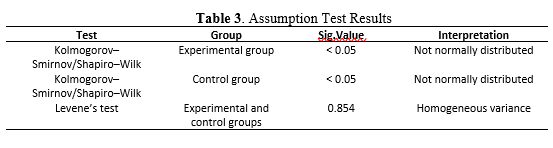
This study investigated the effectiveness of a STEM-integrated Project-Based Learning (STEM-PjBL) algebra e-module in improving seventh-grade students’ algebra learning outcomes and examined students’ self-confidence following its implementation. The study was motivated by students’ difficulties in understanding algebraic concepts and their limited confidence in solving mathematical problems. A quasi-experimental design employing a nonequivalent control group was used, involving 44 students purposively selected from a population of 184 seventh-grade students at Al-Rifaie Gondanglegi Junior High School. The experimental group (n = 22) learned using the STEM-PjBL algebra e-module, whereas the control group (n = 22) used a conventional algebra e-module. The research instruments included an algebra achievement test, expert validation sheets, and a self-confidence questionnaire. Validation results indicated that the e-module demonstrated satisfactory content validity, with Aiken’s V coefficients of 0.78 for material validation and 0.83 for media validation, resulting in an overall coefficient of 0.80. The algebra achievement test showed excellent reliability (Cronbach’s α = 0.917). Following normality and homogeneity testing, learning outcome data were analyzed using the Mann–Whitney U test because the assumption of normality was not met. The results revealed a statistically significant difference in algebra learning outcomes between the experimental and control groups (U = 133.5, Z = −2.576, p = .010), with a moderate effect size (r = 0.39). Descriptive findings further indicated that most students in the experimental group demonstrated high to very high levels of self-confidence. These findings suggest that the STEM-PjBL algebra e-module may enhance students’ algebra learning outcomes and support the development of self-confidence in mathematics learning, although the results should be interpreted cautiously given the limited sample and the descriptive assessment of self-confidence.
References
Adu-Gyamfi, K., Chandler, K., & Thompson, A. (2025). Algebra story problem: The nature of students’ obstacles. School Science and Mathematics, 125(2), 140–153. https://doi.org/10.1111/ssm.12659
Agatolio, F., Albanese, F., & Moro, M. (2018). How an ambitious informatics curriculum can influence algebraic thinking of primary school children. Lecture Notes in Computer Science (Including Subseries Lecture Notes in Artificial Intelligence and Lecture Notes in Bioinformatics), 11169 LNCS, 354–365. https://doi.org/10.1007/978-3-030-02750-6_27
Aini, M., Ridianingsih, D. S., & Yunitasari, I. (2022). Effectiveness of STEM-based project-based learning (PjBL) model on students’ critical thinking skills. Jurnal Kiprah Pendidikan, 1(4), 247–253. https://doi.org/10.33578/kpd.v1i4.118
Azizah, N., Yusrina, J. A., Nugraini, E. D., & Zulfa, L. N. (2025). “Humanizing Humans” in Inclusive Pesantren: The role of peer support in promoting self-efficacy and independence. Jurnal Ilmiah Peuradeun, 13(2), 987–1020. https://doi.org/10.26811/peuradeun.v13i2.1876
Baharun, S., & Solehudin, M. (2023). Artificial learning environment and learning independence in Arabic learning: Mediating effect of learning creativity. Eurasian Journal of Educational Research, 2023(104), 283–302. https://doi.org/10.14689/ejer.2023.104.016
Das, S., & Ali, I. (2023). An investigation on the effects of attitude towards algebraic problem-solving achievement. International Journal of Evaluation and Research in Education, 12(2), 1016–1022. https://doi.org/10.11591/ijere.v12i2.23926
Donovan, A. M., & Fyfe, E. R. (2022). Connecting concrete objects and abstract symbols promotes children’s place value knowledge. Educational Psychology, 42(8), 1008–1026. https://doi.org/10.1080/01443410.2022.2077915
Erayani, F. N., Sridana, N., Arjudin, A., & Baidowi, B. (2022). Hubungan kepercayaan diri dan kemampuan komunikasi matematis dengan hasil belajar matematika. Jurnal Ilmiah Profesi Pendidikan, 7(3c), 1875–1884. https://doi.org/10.29303/jipp.v7i3c.845
Ferdianto, F. (2023). Lesson study: Improving self confidence and mathematic communication. AIP Conference Proceedings, 2614. https://doi.org/10.1063/5.0152386
Fidiastuti, H. R., Lathifah, A. S., Amin, M., Utomo, Y., & Aldya, R. F. (2021). Improving student’s motivation and learning outcomes through genetics e-module. Jurnal Ilmiah Peuradeun, 9(1), 189–200. https://doi.org/10.26811/peuradeun.v9i1.477
Hartono, S. (2025). Evolving trends in mathematical proof research in Indonesian mathematics education: A systematic review from design to data analysis. Multidisciplinary Reviews, 8(12). https://doi.org/10.31893/multirev.2025372
Jaya, A., Hartono, R., Wahyuni, S., & Yulianto, H. J. (2025). The impacts of project based learning strategy with physical activity based on gender towards the students’ learning achievement and self confidence Los. Retos: Nuevas Tendencias En Educación Física, 2025(63), 580–589. https://doi.org/10.47197/retos.v66.110 067
Khaerunisa, N. A., Serevina, V., & Wibowo, F. C. (2024). The effect of STEM-PjBL on students’ creative thinking skills and self-efficacy. AIP Conference Proceedings, 3116(1). https://doi.org/10.1063/5.0211075
Kusumadewi, O. (2024). Independence to learn mathematics during a pandemic in high school students. AIP Conference Proceedings, 2926(1). https://doi.org/10.1063/5.0182870
Liu, Q., Chang, Y., Zhang, G., Li, X., & Wu, L. (2025). Exploring the emotional interaction of emergent roles in collaborative argumentation with multidimensional and fine-grained analysis. Thinking Skills and Creativity, 58. https://doi.org/10.1016/j.tsc.2025.101902
Mawaddah, I. (2024). Discovery-Project-Evaluation-STEM model : A promising learning model for Bima local cultural character. Journal of Honai Math, 7(1), 139–154. https:/doi.org/10.30862/jhm.v7i1.546
McGinn, K. M., & Booth, J. L. (2025). Preparing 4th and 5th graders to learn algebra with worked examples and self-explanation prompts. Journal of Experimental Child Psychology, 260. https://doi.org/10.1016/j.jecp.2025.106348
Moxie, J., Dahl, A. A., Fernandez-Borunda, A., & Partridge, H. (2025). Teamwork makes the dream work: group effectiveness in a “Paper Chase” collaborative writing exercise for higher education. Frontiers in Education, 10(March), 1–10. https://doi.org/10.3389/feduc.2025.1405449
Murdianto. (2025). The role of Pesantren in building socio-religious independence of the sasak lombok community during colonialism. Journal of Ecohumanism, 4(1), 4064–4075. https://doi.org/10.62754/joe.v4i1.6280
Naseer, F., Tariq, R., Alshahrani, H. M., Alruwais, N., & Al-Wesabi, F. N. (2025). Project based learning framework integrating industry collaboration to enhance student future readiness in higher education. Scientific Reports, 15(1), 1–25. https://doi.org/10.1038/s41598-025-10385-4
Nasution, H., Napitupulu, E., & Sinaga, E. K. (2025). Student engagement and achievement with a digital literacy e-module. Academia Open, 10(1), 1–18. https://doi.org/10.21070/acopen.10.2025.11146
Noviyani, A., Maison, M., & Syaiful, S. (2022). The influence of PJBL-Stem and PBL-based on the learning motivation of the students on the mathematical creative thinking skills. Psychology, Evaluation, and Technology in Educational Research, 4(1), 25–35. https://doi.org/10.33292/petier.v4i1.115
Nurhadi, M., Yerizon, Arnawa, I. M., Yarman, & Arnellis. (2025). The ethno mathematics integrated teaching module to increase the mathematical problem solving skills. AKSIOMA: Jurnal Program Studi Pendidikan Matematika, 14(2), 650–662. https://doi.org/10.24127/ajpm.v14i2.10986
Papaneophytou, C., & Nicolaou, S. A. (2025). Promoting critical thinking in biological sciences in the era of artificial intelligence: The role of higher education. Trends in Higher Education, 4(2). https://doi.org/10.3390/higheredu4020024
Patac, A. J., & Patac, L. (2025). Students conceptual mode and analytical thinking: its role during mathematical problem posing and solving. Journal of Honai Math, 8(2). https://doi.org/10.30862/jhm.v8i2.749
Riduan, L., Hartono, Y., & Hiltrimartin, C. (2024). Kemampuan pemodelan matematika siswa kelas VII pada materi aritmetika sosial. Kognitif: Jurnal Riset HOTS Pendidikan Matematika, 4(4), 1434–1445. https://doi.org/10.51574/kognitif.v4i4.2367
Saputri, V., Kusumah, Y. S., Turmudi, T., & Jupri, A. (2025). Designing a STEM-RME-based mathematics e-module to enhance high school students’ numeracy. Journal of Engineering Science and Technology, 20(3), 177–184. https://jestec.taylors.edu.my/Special%20Issue%20ISCoE%202024_4/ISCoE2024_4_23. pdf
Sari, Y. K., Juandi, D., Tamur, M., & Adem, A. M. G. (2021). Meta-analysis: Mengevaluasi efektivitas problem based learning pada kemampuan pemahaman matematis siswa. Journal of Honai Math, 4(1), 1–18. https://doi.org/10.30862/jhm.v4i1.144
Supianti, I. I., Yaniawati, P., Bonyah, E., Hasbiah, A. W., & Rozalini, N. (2025). STEAM approach in project-based learning to develop mathematical literacy and students’ character. Infinity Journal, 14(2), 283–302. https://doi.org/10.22460/infinity.v14i2.p283-302
Susanto, E., & Susanta, A. (2022). Efektivitas e-modul interaktif berbasis pembelajaran project ditinjau dari kemampuan literasi matematis dan kepercayaan diri mahasiswa. JURNAL SILOGISME : Kajian Ilmu Matematika Dan Pembelajarannya, 7(1), 1–13. https://doi.org/10.24269/silogisme.v7i1.5181
Tymms, P. B., Curtis, S. E., Routen, A. C., Thomson, K. H., Bolden, D. S., Bock, S., Dunn, C. E., Cooper, A. R., Elliott, J. G., Moore, H. J., Summerbell, C. D., Tiffin, P. A., & Kasim, A. S. (2016). Clustered randomised controlled trial of two education interventions designed to increase physical activity and well-being of secondary school students: The MOVE Project. BMJ Open, 6(1), 1–10. https://doi.org/10.1136/bmjopen-2015-009318
Ulya, H., Sugiman, Rosnawati, R., & Retnawati, H. (2024). Technology-based learning interventions on mathematical problem-solving: a meta-analysis of research in Indonesia. International Journal of Evaluation and Research in Education , 13(1), 292–301. https://doi.org/10.11591/ijere.v13i1.26380
Wahyuni, R., Suwanto, F. R., Sthephani, A., & Ahyan, S. (2025). Students’ obstacles in solving algebra form problems viewed from mathematical problem-solving ability. Infinity Journal, 14(3), 587–606. https://doi.org/10.22460/infinity.v14i3.p587-606
Winarni, S., Simanjuntak, R. P., Marlina, Rohati, & Kumalasari, A. (2024). Pengembangan e-modul interaktif untuk mendukung algebraic thinking pada materi turunan fungsi aljabar. AKSIOMA: Jurnal Program Studi Pendidikan Matematika, 13(3), 791–803. https://doi.org/10.24127/ajpm.v13i3.8540
Yu, X., Cheng, W., Yang, C., & Zhang, T. (2026). A theoretical review on solving algebra problems. Expert Systems with Applications, 296(PA), 128789. https://doi.org/10.1016/j.eswa.2025.128789
Downloads
Published
How to Cite
Issue
Section
License
Copyright (c) 2026 Lailatul Anggraini, Sri Hariyani, Rahaju Rahaju, Nur Jahan Ahmad

This work is licensed under a Creative Commons Attribution-NonCommercial-ShareAlike 4.0 International License.
License and Copyright Agreement
In submitting the manuscript to the journal, the authors certify that:
- They are authorized by their co-authors to enter into these arrangements.
- The work described has not been formally published before, except in the form of an abstract or as part of a published lecture, review, thesis, or overlay journal. Please also carefully read Journal of Honai Math Posting Your Article Policy at http://journalfkipunipa.org/index.php/jhm/about
- That it is not under consideration for publication elsewhere,
- That its publication has been approved by all the author(s) and by the responsible authorities – tacitly or explicitly – of the institutes where the work has been carried out.
- They secure the right to reproduce any material that has already been published or copyrighted elsewhere.
- They agree to the following license and copyright agreement.
Copyright
Authors who publish with Journal of Honai Math agree to the following terms:
- Authors retain copyright and grant the journal right of first publication with the work simultaneously licensed under a Creative Commons Attribution License (CC BY-NC-SA 4.0) that allows others to share the work with an acknowledgment of the work's authorship and initial publication in this journal.
- Authors are able to enter into separate, additional contractual arrangements for the non-exclusive distribution of the journal's published version of the work (e.g., post it to an institutional repository or publish it in a book), with an acknowledgment of its initial publication in this journal.
- Authors are permitted and encouraged to post their work online (e.g., in institutional repositories or on their website) prior to and during the submission process, as it can lead to productive exchanges, as well as earlier and greater citation of published work.