
Ethnomathematical exploration: Mathematical concepts in the Kolong pigeon game
DOI:
https://doi.org/10.30862/jhm.v8i3.976Keywords:
Cultural Games, Ethnomathematics, GeometryAbstract
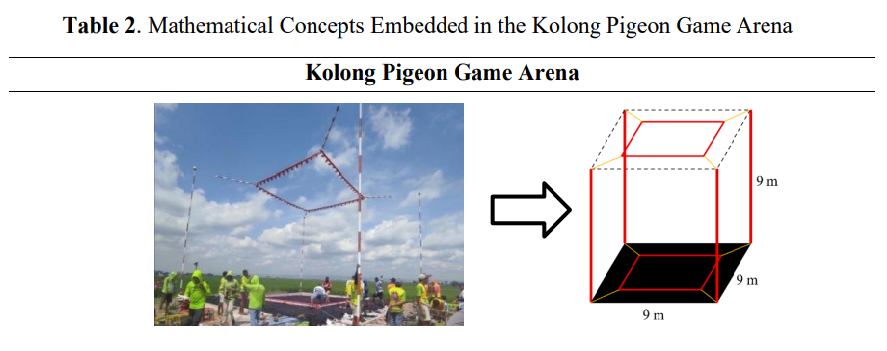
Ethnomathematics, as an interdisciplinary field, emphasizes the fundamental integration of mathematics with cultural practices and knowledge systems. Indonesia's multicultural context provides exceptional opportunities for ethnomathematical investigation, particularly within the domain of culturally embedded games and recreational practices. This study examines the mathematical concepts embedded within the Kolong pigeon game, a traditional cultural practice documented during a regional Kolong pigeon competition held in Gondoharum, Kudus, Jawa Tengah, Indonesia. Employing a qualitative research design grounded in realist ethnographic methodology, data were collected through structured interviews, systematic observation, and comprehensive documentation. Data validity was established through triangulation techniques, cross-referencing findings from interviews, observational field notes, and documentary evidence. Data analysis followed a qualitative analytical framework consistent with Cresswell's approach to qualitative data interpretation. The findings reveal that the Kolong pigeon game demonstrates extensive utilization of geometric concepts, particularly two-dimensional and three-dimensional spatial representations within the game arena. These include explicit applications of symmetry, rectangular and square configurations, cubic and cylindrical shapes. Additionally, the study identified significant implementation of angular concepts within the formal rules governing players' body positioning and spatial orientation. These findings advance ethnomathematical scholarship by illuminating mathematical structures within culturally contextualized games and provide empirically grounded resources for pedagogical integration of cultural games into mathematics instruction.
References
Afandi, M. I., Almaghfiroh, V., & Marhayati. (2024). Ethnomathematics: Mathematical Concepts in the Gaple Card Game. Jurnal Fourier, 13(2), 87–93. https://doi.org/10.14421/fourier.2024.132.87-93
Ahmad, A., Naufal, M. A., Arwadi, F., & Jeranah, J. (2024). Ethnomathematics Exploration in the Mappacci Tradition of the Bugis Ethnic Group. Journal of Honai Math, 7(1), 103–122. https://doi.org/10.30862/jhm.v7i1.549
Aini, I. N., Wulandari, S., & Zuliana, E. (2023). Eksplorasi Etnomatematika Batik Mlatiharjan Demak Terhadap Konsep Matematika Geometri Bangun Datar Sekolah Dasar. Sigma: Jurnal Pendidikan Matematika, 15(2), 184–196. https://doi.org/10.26618/sigma.v15i2.11835
Ainora, E. P., & Utami, N. W. (2024). Revealing the Traditional music of Gamelan: A Mathematical Content for Elementary Students. Journal of Honai Math, 7(1), 123–138. https://doi.org/10.30862/jhm.v7i1.465
Amsikan, S., Deda, Y. N., & Sintia, A. (2023). Ethnomathematics Exploration of Kaneka and Mariam Tradional Games in Nangapanda, Nusa Tenggara Timur Culture. Journal of Honai Math, 6(2), 88–98. https://doi.org/10.30862/jhm.v6i2.434
Aras, A., & Zahrawati, F. (2021). Fostering Students’ Interest in Mathematics Learning with the Utilization of Ethnomathematics through Makkudendeng Traditional Game. MaPan : Jurnal Matematika Dan Pembelajaran, 9(1), 27–39. https://doi.org/10.24252/mapan.2021v9n1a3
Arisetyawan, A., Asterina, R., & Fauzi, I. (2025). Didactic Design of Cube Nets based on
Ethnomathematics of Engklek Game in Elementary School : An Educational Innovation.
Jurnal Kependidikan, 11(1), 26–38. https://doi.org/10.33394/jk.v11i1.12838
Batiibwe, M. S. K. (2024). The Role of Ethnomathematics in Mathematics Education: A Literature Review. Asian Journal for Mathematics Education, 3(4), 383–405. https://doi.org/10.1177/27527263241300400
Bishop, A. J. (1988). The Interactions of Mathematics Education with Culture. Cultural Dynamics, 1(2), 145–157. https://doi.org/10.1177/092137408800100202
Candrasari, D., Aini, A. R., Suryani, D., & Zuliana, E. (2023). Eksplorasi Etnomatematika pada Tari Kretek Kudus. Jurnal Sains Dan Pembelajaran Matematika, 1(1), 5–13. https://doi.org/10.51806/jspm.v1i1.25
Creswell, J. W. (2013). Qualitative Inquiry & Research Design: Choosing Among Five Approaches (3rd ed.). Sage Publication.
Creswell, J. W. (2014). Research Design: Qualitative, Quantitative, and Mixed Methods Approaches (4th ed.). Sage Publication.
D’Ambrosio, U. (1997). Ethnomathematics and its Place in the History of Pedagogy of Mathematics. In A. B. Powell & M. Frankenstein (Eds.), Ethnomathematics: Challenging Eurocentrism in Mathematics Education (pp. 13–24). State University of New York Press. D’Ambrosio, U. (2018). The Program Ethnomathematics: Cognitive, Anthropological, Historic and Socio-Cultural Bases. PNA. Revista de Investigación En Didáctica de La Matemática,
12(4), 229–247. https://doi.org/10.30827/pna.v12i4.7851
Darmayasa, J. B., Netiana, I., & Ibut, N. (2023). Mathematical Concepts in Bening and Woven of Dayak Kenyah Community. Journal of Honai Math, 6(1), 59–70. https://doi.org/10.30862/jhm.v6i1.402
Deda, Y. N., & Disnawati, H. (2024). Ethnomathematical Investigation of Traditional Games for Cultural Preservation in the Indonesia-Timor Leste Border Region. Journal of Honai Math, 7(1), 19–36. https://doi.org/10.30862/jhm.v7i1.512
Deda, Y. N., Disnawati, H., Tamur, M., & Rosa, M. (2024). Global Trend of Ethnomathematics Studies of the Last Decade: A Bibliometric Analysis. Infinity Journal, 13(1), 233–250. https://doi.org/10.22460/infinity.v13i1.p233-250
Faiza, M. N., Maulida, A. Z., & Zuliana, E. (2023). Eksplorasi Etnomatematika Grafis Motif Batik Kudus Jawa Tengah. Jurnal Review Pendidikan Dasar : Jurnal Kajian Pendidikan Dan Hasil Penelitian, 9(3), 198–204. https://doi.org/10.26740/jrpd.v9n3.p198-204
Fendrik, M., Marsigit, & Wangid, M. N. (2020). Analysis of Riau Traditional Game-Based Ethnomathematics in Developing Mathematical Connection Skills of Elementary School Students. Elementary Education Online, 19(3), 1605–1618. https://doi.org/10.17051/ilkonline.2020.734497
Kho, R., Tandililing, P., & Yektiningtyas, W. (2025). Exploring Honai Construction as a Resource for Mathematics Learning. Journal of Honai Math, 8(1), 1–20. https://doi.org/10.30862/jhm.v8i1.785
Leavy, P. (2017). Research Design: Quantitative, Qualitative, Mixed Methods, Arts-Based, and Community-Based Participatory Research Approaches. Guilford Press.
Meeran, S., Kodisang, S. M., Moila, M. M., Davids, M. N., & Makokotlela, M. V. (2024).
Ethnomathematics in Intermediate Phase: Reflections on the Morabaraba Game as Indigenous Mathematical knowledge. African Journal of Research in Mathematics, Science and Technology Education, 28(2), 171–184. https://doi.org/10.1080/18117295.2024.2340095
Mellawaty, Nurhazijah, E., & Mulyana, D. (2023). Ethnomathematics of Darussajidin Mosque Indramayu in Designing Mathematics Activities and Philosophy of Islamic Values. Journal of Honai Math, 6(1), 28–45. https://doi.org/10.30862/jhm.v6i1.389
Nurdiyanto, E., Resticka, G. A., & Yanti, S. N. H. (2022). Ekoleksikon Burung Merpati Sebagai Suplemen Pembelajaran Bahasa Berbasis Lingkungan: Perspektif Ekolinguistik. Semiotika: Jurnal Ilmu Sastra Dan Linguistik, 23(1), 1–13. https://doi.org/10.19184/semiotika.v23i1.24367
Owusu, P., & Addo, A. O. (2023). Alikoto: Mathematics Instruction and Cultural Games in Ghana. Cogent Education, 10(1). https://doi.org/10.1080/2331186X.2023.2207045
Permita, A. I., Nguyen, T.-T., & Prahmana, R. C. I. (2022). Ethnomathematics on the Gringsing Batik Motifs in Javanese Culture. Journal of Honai Math, 5(2), 95–108. https://doi.org/10.30862/jhm.v5i2.265
Prahmana, R. C. I., & D’Ambrosio, U. (2020). Learning Geometry and Values from Patterns: Ethnomathematics on the Batik Patterns of Yogyakarta, Indonesia. Journal on Mathematics Education, 11(3), 439–456. https://doi.org/10.22342/jme.11.3.12949.439-
456
Putra, H. D., & Ramdhani, S. (2025). How to Make “ Sumedang ” Tofu : An Ethnomathematics Context from West Java. Journal of Honai Math, 8(1), 57–70. https://doi.org/10.30862/jhm.v8i1.690
Rahmawati, S., & Sulisti, H. (2025). Ethnomathematics Study: The Traditional Game of Tikam Bana as a Medium for Learning Mathematics. Indo-MathEdu Intellectuals Journal, 6(2), 1880–1891. https://doi.org/10.54373/imeij.v6i2.2724
Rahmi, F., Yonalta, S., & Rozana, I. (2025). Ethnomathematics on the Saluang : Analysis of
Mathematical Concepts in Minangkabau Musical Instruments. Jurnal Elemen, 11(2), 328–
345. https://doi.org/10.29408/jel.v11i2.27874
Ramadhan, A. A., Suprianto, Sumarno, & Dijaya, R. (2021). Sistem Pendukung Keputusan Pemilihan Burung Merpati Berkualitas dengan Metode Analytical Hierarchy Process (AHP) Berbasis Web. Procedia of Engineering and Life Science, 1(2). https://doi.org/10.21070/pels.v1i2.929
Rodríguez-Nieto, C. A., Pabón-Navarro, M. L., Cantillo-Rudas, B. M., Sudirman, & Moll, V.
F. (2025). The Potential of Ethnomathematical and Mathematical Connections in the Pre- Service Mathematics Teachers’ Meaningful Learning when Problems-Solving About Brick-Making. Infinity Journal, 14(2), 419–444. https://doi.org/10.22460/infinity.v14i2.p419-444
Rosa, M., & Orey, D. C. (2021). An Ethnomathematical Perspective of STEM Education in a Glocalized World. Bolema - Mathematics Education Bulletin, 35(70), 840–876. https://doi.org/10.1590/1980-4415v35n70a14
Salma, R., Fevironika, D. O., & Zuliana, E. (2022). Ethnomathematical Study of Jepara Troso Ikat Weaving Motifs in Two Dimensional Geometry Mathematics. Kontinu: Jurnal Penelitian Didaktik Matematika, 6(2), 102–115. https://doi.org/10.30659/kontinu.6.2.102-
115
Sugiyono. (2023). Metode Penelitian Pendidikan (3rd ed.). Alfabeta.
Sulistyawati, E., Nirmala, B. I., & Hamidah, D. (2025). Ethnomathematical Exploration of the Remo Dance as a Source for Mathematics Learning. Jurnal Elemen, 11(1), 34–49. https://doi.org/10.29408/jel.v11i1.26997
Sunzuma, G., & Maharaj, A. (2021). In-Service Mathematics Teachers’ Knowledge and Awareness of Ethnomathematics Approaches. International Journal of Mathematical Education in Science and Technology, 52(7), 1063–1078. https://doi.org/10.1080/0020739X.2020.1736351
Sunzuma, G., & Maharaj, A. (2022). Zimbabwean In-Service Teachers’ Views of Geometry: an Ethnomathematics Perspective. International Journal of Mathematical Education in Science and Technology, 53(9), 2504–2515. https://doi.org/10.1080/0020739X.2021.1919770
Tachie, S. A., & Galawe, B. F. (2021). The Value of Incorporating Indigenous Games in the Teaching of Number Sentences and Geometric Patterns. International Journal for Cross- Disciplinary Subjects in Education, 12(1), 4350–4361. https://doi.org/10.20533/ijcdse.2042.6364.2021.0533
Tamara, L. F., Permadani, R. A., & Zuliana, E. (2025). Eksplorasi Etnomatematika pada Tari Brambang Desa Kunir Demak. Inspiramatika: Jurnal Inovasi Pendidikan Dan Pembelajaran Matematika, 11(1), 141–151. https://doi.org/10.52166/inspiramatika.v11i1.8655
Turmudi, T., Susanti, E., Rosikhoh, D., & Marhayati, M. (2021). Ethnomathematics: Mathematical Concept in the Local Game of Tong Tong Galitong Ji for High School. Participatory Educational Research, 8(1), 219–231. https://doi.org/10.17275/per.21.12.8.1
Umbara, U., Prabawanto, S., & Anwar, A. S. (2025). Ethnomathematics Study: The Use of Modulo Concept in Kampung Naga. Infinity Journal, 14(2), 513–530. https://doi.org/10.22460/infinity.v14i2.p513-530
Umbara, U., Wahyudin, W., & Prabawanto, S. (2021). Exploring Ethnomathematics with Ethnomodeling Methodological Approach: How Does Cigugur Indigenous People Using Calculations to Determine Good Day to Build Houses. Eurasia Journal of Mathematics, Science and Technology Education, 17(2), 1–19. https://doi.org/10.29333/EJMSTE/9673 Wahyuni, & Pratiwi, S. H. (2023). Ethnomathematics in Aceh Coastal Children’s Football Game. Jurnal Ilmiah Sekolah Dasar, 7(1), 150–158.
https://doi.org/10.23887/jisd.v7i1.49924
Wiryanto, Primaniarta, M. G., & de Mattos, J. R. L. (2022). Javanese Ethnomathematics: Exploration of the Tedhak Siten Tradition for Class Learning Practices. Journal on Mathematics Education, 13(4), 661–680. https://doi.org/10.22342/jme.v13i4.pp661-680
Yumiati, Y., Haji, S., & Yulitasari, E. (2023). Improving Mathematics Learning Outcome through Outdoor Learning Based on Ethnomathematics of Bengkulu’s Traditional Game ‘Gotri Ayo Gotri. JTAM (Jurnal Teori Dan Aplikasi Matematika), 7(1), 23–33. https://doi.org/10.31764/jtam.v7i1.10189
Yuniar, R. C., & Mustaqim, K. (2021). Perancangan Promosi Lomba Fotografi dalam Event Balap Burung Merpati. JCA of Design & Creative, 1(03), 374–382. https://jca.esaunggul.ac.id/index.php/JCADESIGN/article/view/332
Zayyadi, M., Surahmi, E., Aini, S. D., & Hidayat, D. (2025). Ethnomathematics-Based Traditional Games as a Pedagogical Approach to Enhance Logical-Mathematical Intelligence. Jurnal Elemen, 11(1), 225–244. https://doi.org/10.29408/jel.v11i1.28350
Zuliana, E., Dwiningrum, S. I. A., Wijaya, A., & Purnomo, Y. W. (2023). The Geometrical Patterns and Philosophical Value of Javanese Traditional Mosque Architecture for Mathematics Learning in Primary School: An Ethnomathematic Study. Journal of Education Culture and Society, 14(2), 512–532. https://doi.org/10.15503/jecs2023.2.512.532
Downloads
Published
How to Cite
Issue
Section
License
Copyright (c) 2026 Eka Zuliana, Femas Anggit Wahyu Nugroho

This work is licensed under a Creative Commons Attribution-NonCommercial-ShareAlike 4.0 International License.
License and Copyright Agreement
In submitting the manuscript to the journal, the authors certify that:
- They are authorized by their co-authors to enter into these arrangements.
- The work described has not been formally published before, except in the form of an abstract or as part of a published lecture, review, thesis, or overlay journal. Please also carefully read Journal of Honai Math Posting Your Article Policy at http://journalfkipunipa.org/index.php/jhm/about
- That it is not under consideration for publication elsewhere,
- That its publication has been approved by all the author(s) and by the responsible authorities – tacitly or explicitly – of the institutes where the work has been carried out.
- They secure the right to reproduce any material that has already been published or copyrighted elsewhere.
- They agree to the following license and copyright agreement.
Copyright
Authors who publish with Journal of Honai Math agree to the following terms:
- Authors retain copyright and grant the journal right of first publication with the work simultaneously licensed under a Creative Commons Attribution License (CC BY-NC-SA 4.0) that allows others to share the work with an acknowledgment of the work's authorship and initial publication in this journal.
- Authors are able to enter into separate, additional contractual arrangements for the non-exclusive distribution of the journal's published version of the work (e.g., post it to an institutional repository or publish it in a book), with an acknowledgment of its initial publication in this journal.
- Authors are permitted and encouraged to post their work online (e.g., in institutional repositories or on their website) prior to and during the submission process, as it can lead to productive exchanges, as well as earlier and greater citation of published work.




