
Ethnomathematical Knowledge Embedded in the Banua Oge Traditional House: A Cultural Analysis Through Bishop’s Fundamental Mathematical Activities
DOI:
https://doi.org/10.30862/jhm.v9i2.1258Keywords:
Banua Oge, Ethnographic Approach, Geometrics Elements, Traditional HousesAbstract
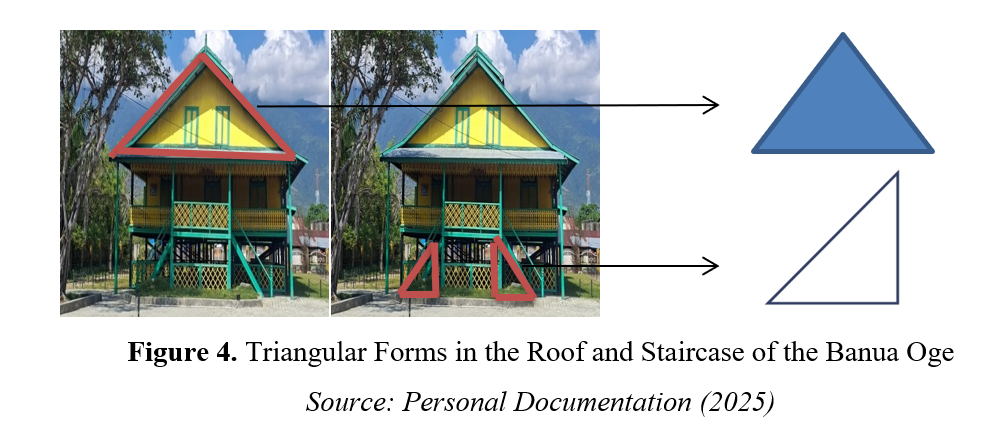
Mathematics is frequently perceived by students as abstract, difficult, and disconnected from everyday experiences, resulting in diminished engagement and limited conceptual understanding. Although integrating cultural contexts into mathematics instruction has been widely acknowledged as an effective strategy for enhancing learning meaningfulness, studies that systematically utilize local architectural heritage, particularly the Banua Oge traditional house in Palu City, as a foundation for designing contextualized mathematics learning remain scarce. Accordingly, this qualitative study, employing an ethnographic approach, investigates the geometric and mathematical elements embedded in the architectural structure of the Banua Oge traditional house to inform the development of culturally grounded mathematics learning materials. Data were collected through participant observations, documentation, and semi-structured interviews with cultural experts, and were analyzed using the interactive model of Miles and Huberman, encompassing data condensation, data display, and conclusion drawing. The findings demonstrate that the architectural features of the Banua Oge embody diverse mathematical concepts, including two-dimensional geometric figures, numerical concepts, spatial configurations, and Alan Bishop’s fundamental mathematical activities. These findings highlight the potential of local cultural heritage as a meaningful ethnomathematical resource for bridging formal mathematical concepts with students lived experiences. Finally, this study offers a culturally responsive pedagogical framework that supports teachers in designing mathematics instruction that is more contextual, engaging, and relevant, while contributing to the advancement of ethnomathematics and culturally grounded mathematics education.
References
Angraini, F., Erita, S., Oktafia, M., & Nasution, E. Y. P. (2023). Pengembangan Media Pembelajaran Flipchart Berbasis Etnomatematika. Proximal: Jurnal Penelitian Matematika Dan Pendidikan Matematika, 6(2), 196–207. https://doi.org/10.30605/proximal.v6i2.2586
Bishop, A. J. (1999). Mathematics teaching and values education an intersection in need of research. Zentralblatt Für Didaktik Der Mathematik, 31(1), 1–4. https://doi.org/10.1007/s11858-999-0001-2
Creswell, J. W. (2012). Research Design: Pendekatan Kuantitatif, Kualitatif,dan Mixed (Edisi Ketiga). Pustaka Pelajar, 311.
D’Ambrosio, U. (1985). Ethnomathematics and Its Place in the History and Pedagogy of Mathematics. For the Learning of Mathematics, 5(1), 44-48. http://www.jstor.org/stable/40247876
Damayanti, A. R., Wahyono, U., Syukur, M. S. S. A., & Syamsuriwal. (2025). Pengembangan Media Pembelajaran FisikaBerbasis IoTpada Sistem Keamanan Rumah AdatPalu. Jurnal Pendidikan Fisika Tadulako Online, 13, 377–385. https://doi.org/10.22487/jpft.v13
Hidayati, U., Haidar, I., & Marillah, D. (2025). Ethnomathematical Geometric Shapes Architecture Exploration of in Mekongga Traditional House. Journal of Honai Math, 8(August), 227–240. https:/doi.org/10.30862/jhm.v8i2.805
Khapsari, D I Anjariyah, D. F. P., & Majapahit, U. I. (2025). Eksplorasi Etnomatematika Pada Aktivitas Jual Beli di Pasar Keramat. Prismatika: Jurnal Pendidikan dan Riset Matematika, 7(2), 286–296. https://doi.org/10.33503/prismatika.v7i2.1221
Kho, R., Tandililing, P., & Yektiningtyas, W. (2025). Exploring Honai construction as a resource for mathematics learning. Jurnal of Honai Math, 8(April), 1–20. https://doi.org/10.30862/jhm.v8i1.785
Larasati, I., Pramasdyahsari, A. S., & Harun, L. (2025). Enhancing elementary student ’ s numeracy skills through ethnomathematics-based learning : An analysis of minimum competency assessment results. Journal of Honai Math, 8(1), 71–88. https:/doi.org/10.30862/jhm.v8i1.861
Laukum, M., Rosmiati, Sedia, M. E., Khadijah, & Hindi, A. N. A. (2024). Eksplorasi Etnomatematika pada Konsep Segitiga dalam Rumah Adat Bugis-Makassar. Jurnal Riset HOTS Pendidikan Matematika, 4(May), 44–56. https://doi.org/10.51574/kognitif.v4i1.1194
Mellawaty, Nurhazijah, E., & Mulyana, D. (2023). Ethnomathematics of Darussajidin Mosque Indramayu in designing mathematics activities and philosophy of Islamic values. Jurnal of Honai Math, 6(April), 28–45. https://doi.org/10.30862/jhm.v6i1.389
Miles, M. B., Huberman, A. M., & Saldana, J. (1994). Qualitative Data Analysis A Methodsv Sourcebook (Edition 3).
Muhammad, M., Maradjado, C. A., & Nurdin, N. (2021). Perancangan Aplikasi Pengenalan Rumah Adat Berbasis Android. Jurnal Elektronik Sistem Informasi dan Komputer, 4(2), 23–36. https://jesik.web.id/index.php/jesik/article/download/84/60
Novalena, K., & Listiani, M. (2022). Kajian Etnomatematika pada Rumah Adat Betang Ensaid Panjang Kalimantan Barat. In PRISMA, Prosiding Seminar Nasional Matematika, 5, 244–253. https://journal.unnes.ac.id/sju/prisma/article/view/54164
Patri, S. F. D., & Heswari, S. (2022). Etnomatematika Dalam Seni Anyaman Jambi Sebagai Sumber Pembelajaran Matematika. Jurnal Inovasi Penelitian, 2(8), 2705-2714. https://doi.org/10.47492/jip.v2i8.1150.
Purba, F. W., Siregar, J., & Saragih, V. R. (2023). Analisis Semiotik Simbol Terhadap Bangunan Rumah Adat Suku Simalungun Kabupaten Simalungun. Jurnal Ilmu Pendidikan, Bahasa, Sastra dan Budaya, 1(6), 91–103. https://doi.org/10.61132/morfologi.v1i5.56
Putra, H. D., & Ramdhani, S. (2025). How to make “ Sumedang ” tofu : An ethnomathematics context from West Java. Journal of Honai Math, 8(1), 57–70. https://doi.org/10.30862/jhm.v8i1.690
Sari, V. A., Arfuah, N., Ardiansyah, W., Ayudyaning, S., & Fauziah, N. (2023). Pengembangan Media Pembelajaran Flashcard Digital Berbasis Etnomatematika untuk Pembelajaran Matematika Sekolah Dasar. In Social, Humanities, and Education Studies (SHES), 7(Snip), 58–64. https://doi.org/10.20961/shes.v6i3.82300
Syifa, M., & Gumala, Y. (2025). Media Pembelajaran Berbasis Etnomatematika Di Sekolah Dasar. BERSATU: Jurnal Pendidikan Bhinneka Tunggal Ika, 3(1), 32–45. https://doi.org/10.51903/bersatu.v2i1.552
Turmuzi, M. (2022). Meta Analisis: Pengaruh Pembelajaran Berbasis Etnomatematika Terhadap Hasil Belajar Matematika Siswa. Jurnal Pembelajaran Matematika Inovatif, 5(5), 1525–1534. https://doi.org/10.22460/jpmi.v5i5.1525-1534
Tyas, A. K., Ursia, A. A., & Carolina, O. P. (2022). Kajian Etnomatematika pada Struktur Bangunan Rumah Adat Riau Selaso Jatuh Kembar. In PRISMA, Prosiding Seminar Nasional Matematika 5, 397–405. https://journal.unnes.ac.id/sju/prisma/article/view/54544
Wardhani, C. A. R., Permatasari, P. F., & Dwiasmaraditya, N. (2022). Kajian Etnomatematika pada Konstruksi Rumah Adat Suku Muna dari Sulawesi Tenggara. In PRISMA, Prosding Seminar Nasional Matematika, 5, 354–363. https://journal.unnes.ac.id/sju/index.php/prisma/%0AISSN 2613-9189
Wikaningtyas, C. R., Hayati, N., & Rahmasari, K. N. (2022). Kajian Etnomatematika Terkait Aspek-aspek Geometri pada Rancang Bangunan Rumah Adat Larik. In PRISMA, Prosding Seminar Nasional Matematika, 5, 414–422.
Downloads
Published
How to Cite
Issue
Section
License
Copyright (c) 2026 Rahdi Alwadia, Mubarik, Pathuddin, Rita Lefrida

This work is licensed under a Creative Commons Attribution-NonCommercial-ShareAlike 4.0 International License.
License and Copyright Agreement
In submitting the manuscript to the journal, the authors certify that:
- They are authorized by their co-authors to enter into these arrangements.
- The work described has not been formally published before, except in the form of an abstract or as part of a published lecture, review, thesis, or overlay journal. Please also carefully read Journal of Honai Math Posting Your Article Policy at http://journalfkipunipa.org/index.php/jhm/about
- That it is not under consideration for publication elsewhere,
- That its publication has been approved by all the author(s) and by the responsible authorities – tacitly or explicitly – of the institutes where the work has been carried out.
- They secure the right to reproduce any material that has already been published or copyrighted elsewhere.
- They agree to the following license and copyright agreement.
Copyright
Authors who publish with Journal of Honai Math agree to the following terms:
- Authors retain copyright and grant the journal right of first publication with the work simultaneously licensed under a Creative Commons Attribution License (CC BY-NC-SA 4.0) that allows others to share the work with an acknowledgment of the work's authorship and initial publication in this journal.
- Authors are able to enter into separate, additional contractual arrangements for the non-exclusive distribution of the journal's published version of the work (e.g., post it to an institutional repository or publish it in a book), with an acknowledgment of its initial publication in this journal.
- Authors are permitted and encouraged to post their work online (e.g., in institutional repositories or on their website) prior to and during the submission process, as it can lead to productive exchanges, as well as earlier and greater citation of published work.




