Ethnomathematics in religious tourism architecture: mathematical concepts and islamic geometric ornaments at Alun-Alun Cililin
DOI:
https://doi.org/10.30862/jhm.v9i1.1170Keywords:
Alun-Alun Cililin Park, Ethnomathematics, Islamic Geometric Patterns, Mathematical Concepts, Meaningful LearningAbstract
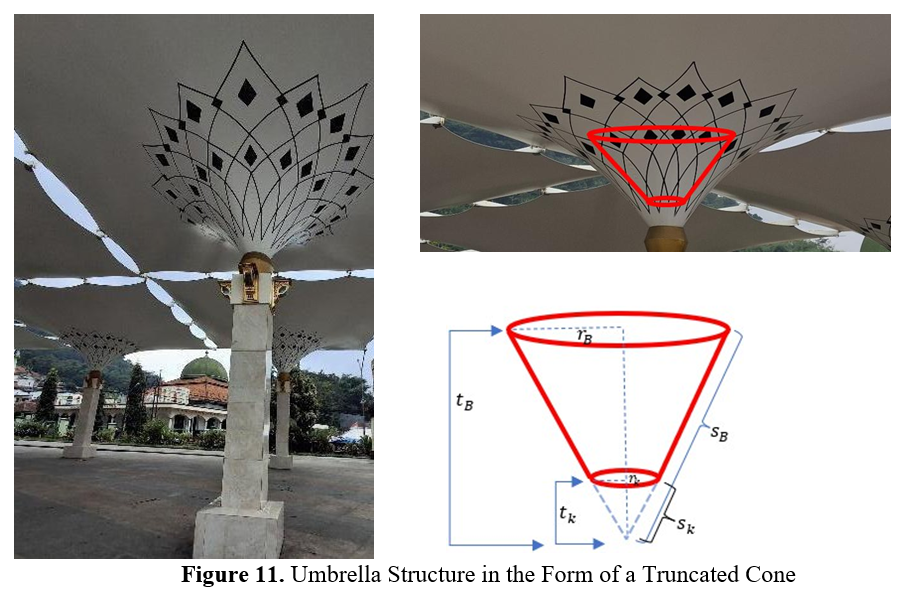
Meaningful learning is a key objective of the contemporary Indonesian curriculum, emphasizing conceptual understanding rather than the mere memorization of mathematical formulas. However, the integration of cultural and spiritual dimensions into mathematics instruction remains limited. Ethnomathematics offers a valuable approach to addressing this gap by exploring mathematical ideas embedded in cultural artifacts. This study investigates the philosophical meanings reflected in the Islamic geometric patterns of Alun-Alun Cililin Park, West Bandung Regency, Indonesia, and examines their relationship with mathematical concepts. An exploratory qualitative design with a semiotic approach was employed. Data were collected through observation and documentation and analyzed using Charles Sanders Peirce’s semiotic framework, consisting of representamen, object, and interpretant. The analysis identified various mathematical concepts embedded in the geometric patterns, including plane geometry (quadrilaterals, pentagons, and circles), solid geometry (rectangular prisms, trapezoidal prisms, cylinders, and truncated cones), and transformational geometry (rotation, dilation, and reflection). The patterns also embody philosophical values related to mutual cooperation, cultural preservation, social solidarity, spiritual preparedness, and the pursuit of a meaningful life. These findings highlight the potential of Islamic geometric patterns as culturally grounded resources for connecting mathematical learning with cultural and spiritual values, thereby contributing to the development of more meaningful and contextually relevant mathematics education.
References
Abdullah, A. S. (2017). Ethnomathematics in perspective of Sundanese culture. Journal on Mathematics Education, 8(1), 1–16. https://doi.org/10.22342/jme.8.1.3877.1-16
Abdullahi, Y., & Embi, M. R. Bin. (2013). Evolution of Islamic geometric patterns. Frontiers of Architectural Research, 2(2), 243–251. https://doi.org/10.1016/j.foar.2013.03.002
Alfisyahr, Gazali, Ulinsa, Efendi, & Agustan. (2026). Analysis of taiganja semiotics in the Kailinese. IDEAS: Journal of Language Teaching and Learning, Linguistics and Literature, 14(1), 211–224. https://doi.org/10.24256/ideas.v14i1.9675
Anggraeni, S. W., Alpian, Y., Prihamdani, D., & Winarsih, E. (2020). Pengembangan multimedia pembelajaran interaktif berbasis video untuk meningkatkan minat belajar siswa sekolah dasar. Jurnal Basicedu, 5(5), 3(2), 524–532. https://doi.org/10.31004/basicedu.v5i6.1636
Awalia, L. M., Pratiwi, I. A., & Kironoratri, L. (2021). Analisis penggunaan aplikasi pembelajaran daring terhadap minat belajar siswa di desa Karangmalang. Jurnal Basicedu, 5(5), 3940–3949. https://doi.org/10.31004/basicedu.v5i5.1354
D’Ambrosio, U. (2016). An overview of the history of Ethnomathematics. In M. Rosa, U. D’Ambrosio, D. C. Orey, L. Shirley, W. V. Alangui, P. Palhares, & M. E. Gavarrete (Eds.), Current and Future Perspectives of Ethnomathematics as A Program. Springer. https://doi.org/10.1007/978-3-319-30120-4_2
Darmalaksana, W. (2021). Rehal Al-Qur’an guna perlindungan kekayaan intelektual dalam lingkup hak paten: Studi design thinking. International Conference on University-Community Enggagement, 1–9. https://digilib.uinsgd.ac.id/39651/1/Rehal al-Qur%27an.pdf
Delfi, E. A., Mudra, I. W., & Swandi, I. W. (2020). Analisis makna dan bentuk busana adat daha dan truna desa Bungaya Karangasem. Ars: Jurnal Seni Rupa Dan Desain, 23(3), 128–135. https://doi.org/10.24821/ars.v23i3.4473
Dewi, F. C., Nurfithriyya, A., Susiana, S., Rakhmawati, R., & Anggoro, B. S. (2019). Etnomatematika eksplorasi tapis Lampung sebagai sumber belajar dalam upaya melindungi warisan budaya Lampung. Journal of Mathematics Education and Science, 2(2), 61–68. https://doi.org/10.32665/james.v2i2.74
Efendi, D., Marian, F., Lestari, F., Zain, R. M., & Ramadhani, S. (2025). Eksplorasi potensi etnomatematika Lampung sebagai dasar pengembangan modul pembelajaran geometri berbasis augmented reality. Jurnal Pendidikan Matematika Malikussaleh, 5(4), 456–470. https://doi.org/10.29103/jpmm.v5i4.22987
Efendi, F., & Susanti, I. (2025). Pajacombo: Hiburan dan permainan tradisional. Fahmi Karya.
Febrianti, M. D., Al-bahij, A., & Mufidah, L. (2024). Pentingnya konteks dalam pengembangan pembelajaran matematika pada anak ekolah dasar kelas 2. Universitas Muhammadiyah Jakarta, 1312–1320. https://jurnal.umj.ac.id/index.php/semnasfip/article/view/23724
Hidayat, W., & Fauzi, F. (2023). Analisis miskonsepsi siswa kelas XII MAN kota Cimahi pada materi limit fungsi aljabar. JPMI – Jurnal Pembelajaran Matematika Inovatif, 6(2), 561–572. https://doi.org/10.22460/jpmi.v6i2.17433
Hidayati, L., & Habibi, M. (2025). Ethnomathematics: Geometric meaning and cultural values of Tegalsari mosque in mathematics learning. ICONIS: International Conference on Islamic Studies, 9, 19–30. https://doi.org/10.19105/iconis.v9i1.953
Kevinia, C., Syahara, P., Aulia, S., & Astari, T. (2022). Analisis teori semiotika roland barthes dalam film Miracle in Cell No .7 versi Indonesia. Journal of Communication Studies and Society, 1(2), 38–43. https://doi.org/10.38043/commusty.v1i2.4082
Khusniyah, A. (2023). Tafsir sufistik surat Al-Fatihah dalam bundel naskah Kajen Pati. Jumantara: Jurnal Manuskrip Nusantara, 14(1), 19–31. https://doi.org/10.37014/jumantara.v14i1.3504
Liesandra, S. O. (2022). A cultural semiotics study: Ethnomathematical exploration in geometry materials through cultural site in Aceh. Jurnal Cakrawala Pendas, 8(3), 688–697. https://doi.org/10.31949/jcp.v8i2.2537
Marlina, R., Hidayat, W., & Supriatna, T. (2026). Developing ethnomathematics-based interactive digital book to improve mathematical connections and self- confidence: The PMRI approach. Kalamatika: Jurnal Pendidikan Matematika, 11(1), 120–145. https://doi.org/10.22236/kalamatika.vol11no1.2026pp120-145
Miles, M. B., & Huberman, A. M. (1994). Qualitative data analysis: An expanded sourcebook. Sage. https://doi.org/10.1016/0149-7189(96)88232-2
Mumu, J., Prahmana, R. C. I., & Tanujaya, B. (2026). Ethnomathematics in elementary education: A systematic review of pedagogical approaches, technological innovation, and global implementations. Jurnal Elemen, 12(2), 330-355. https://e-journal.hamzanwadi.ac.id/index.php/jel/article/view/34695
Mustapa, M., Safarudin, M., Azwani, K., Teknologi, U., Kota, M., Cawangan, K., & Kunci, K. (2023). The influence of islamic treatments on individual health and wellbeing. INTIQAD: Jurnal Agama Dan Pendidikan Islam, 15(2), 342–353. https://doi.org/10.30596/17415
Muthia, S. N., & Maulani, I. (2025). Mathematical ideas embedded in water debit practices of sand sellers in ciseupan : An ethnomathematics study. Pi-Radian: Journal of Mathematics Education, 3(1), 51–60. https://doi.org/10.63214/piradian.v3i1.pp51-60
Naldi, W., Suryadi, S., R, G. A., Herman, T., & Dwiana, R. (2023). Pembelajaran berdiferensiasi berbasis rancangan understanding by design (UbD) terhadap minat belajar siswa sekolah dasar. JIIP - Jurnal Ilmiah Ilmu Pendidikan, 6(7), 5224–5231. https://doi.org/10.54371/jiip.v6i7.2374
Nalim, Wardono, Waluya, B., Fahmi, A. F. R., Shinta, D., Albab, U., & Ramadhina, M. Z. (2024). Eksplorasi etnomatematika pada arsitektur masjid Agung Nurul Kalam Pemalang. Prisma, Prosiding Seminar Nasional Matematika, 7, 587–595. https://proceeding.unnes.ac.id/prisma/article/view/3008/2472
Nirmala, A. P. H., Violaningtyas, O. A., & Damayanti, R. A. (2019). Ornamen Islam pada bangunan arsitektur masjid dian al mahri kubah emas Depok. Jurnal Dimensi Seni Rupa Dan Desain, 16(1), 29–42. https://doi.org/10.25105/dim.v16i1.6159
Nursanti, Y. B., & Febrianti, I. C. (2025). Systematics literature review: The application of ethnomathematics in batik art for understanding geometric concepts. KnE Social Sciences, 10(11), 158–171. https://doi.org/10.18502/kss.v10i11.18739
Purniati, T., Juandi, D., & Suhaedi, D. (2021). Ethnomathematics exploration of the masjid Raya Bandung ornaments in transformation geometry materials. Journal of Medives: Journal of Mathematics Education IKIP Veteran Semarang, 5(2), 235–243. https://doi.org/10.31331/medivesveteran.v5i2.1639
Ridwan, Setiani, Sandy, & Eti Sustini. (2022). Pelaksanaan khataman Al-qur’an (tradisi sosial keagamaan pada masyarakat Melayu kota Pontianak. Al-Afkar, Journal For Islamic Studies, 5(4), 142–158. https://doi.org/10.31943/afkarjournal.v5i4.365
Risdiyanti, I., & Prahmana, R. (2017). Ethnomathematics: Exploration in Javanese culture ethnomathematics: Exploration in Javanese culture. Journal of Physics: Conference Series, 943(1), 012032. https://doi.org/10.1088/1742-6596/943/1/012032
Risdiyanti, I., Shahrill, M., Prahmana, R., & Mahadi, M. (2023). An exploration of geometrical concepts in Brunei woven textiles: An ethnomathematical study. Indonesian Journal of Ethnomathematics, 2(2), 1–10. https://doi.org/10.48135/ije.v2i2.1-10
Rizapoor, H. (2023). Pancasila as a framework for unity: Assessing applicability in culturally diverse nations, a case study of Afghanistan. Al-Tatawur: International Journal of Social Science, 1(4), 1–20. https://doi.org/10.61806/al-tatawur.v1i4.26
Rizqiyah, D. I. M., & Khoiri, N. (2025). Perspective of religious moderation through art : Analysis of the physics of spatial form in the construction of the great mosque of Demak. Intizar, 31(2), 104–113. https://doi.org/10.19109/intizar.v31i2.29327
Rosa, M., Orey, D. C., Shirley, L., Palhares, P., Rosa, M., Orey, D. C., Rosa, M., Gavarrete, M. E., Alangui, W. V, & Rosa, M. (2016). State of the art in Ethnomathematics. In Current and future perspectives of ethnomathematics as a program (pp. 11–37). Springer. https://doi.org/10.1007/978-3-319-30120-4_3
Septiani, E., & Sari, N. I. (2023). Analisis semantik desain bangunan di Yogyakarta dalam perspektif etnomatematika. Jurnal Pujangga, 9(1), 38–48. https://doi.org/10.47313/pujangga.v9i1.2459
Setinawati, Jeniva, I., Tanyid, M., & Merilyn. (2025). The framework of religious moderation: A socio-theological study on the role of religion and culture from Indonesia’s perspective. Social Sciences and Humanities Open, 11, 101271. https://doi.org/10.1016/j.ssaho.2024.101271
Siregar, T. (2025). Integrasi etnomatematika dengan kearifan budaya lokal. Goresan Pena. https://url-shortener.me/eohw
Stevani, A. L., Tanujaya, B., & Widodo, S. A. (2025). Android-based mathematics learning media on geometry using the context of tourist destinations. Mathematics Teaching Research Journal, 17(2), 60–79. https://s3.amazonaws.com/files.commons.gc.cuny.edu/wp-content/blogs.dir/34462/files/2025/05/3.Android-based-Mathematics-.pdf
Supriatna, T., Darhim, D., & Turmudi, T. (2017). Local intruction theory dalam pendidikan matematika realistik untuk menumbuhkan kemampuan berpikir logis. Mimbar Pendidikan, 2(2), 173–184. https://doi.org/10.17509/mimbardik.v2i2.8627
Turnip, R. S. S. (2022). Pentingnya perlindungan terhadap pengetahuan tradisional dan ekspresi budaya dalam negara yang kaya akan budaya. Dharmasisya: Jurnal Program Magister Hukum FHUI, 1(4), 2067–2076. https://scholarhub.ui.ac.id/dharmasisya/vol1/iss4/31%0AThis
Downloads
Published
How to Cite
Issue
Section
License
Copyright (c) 2026 Ratna Marlina, Wahyu Hidayat, Tatang Supriatna

This work is licensed under a Creative Commons Attribution-NonCommercial-ShareAlike 4.0 International License.
License and Copyright Agreement
In submitting the manuscript to the journal, the authors certify that:
- They are authorized by their co-authors to enter into these arrangements.
- The work described has not been formally published before, except in the form of an abstract or as part of a published lecture, review, thesis, or overlay journal. Please also carefully read Journal of Honai Math Posting Your Article Policy at http://journalfkipunipa.org/index.php/jhm/about
- That it is not under consideration for publication elsewhere,
- That its publication has been approved by all the author(s) and by the responsible authorities – tacitly or explicitly – of the institutes where the work has been carried out.
- They secure the right to reproduce any material that has already been published or copyrighted elsewhere.
- They agree to the following license and copyright agreement.
Copyright
Authors who publish with Journal of Honai Math agree to the following terms:
- Authors retain copyright and grant the journal right of first publication with the work simultaneously licensed under a Creative Commons Attribution License (CC BY-NC-SA 4.0) that allows others to share the work with an acknowledgment of the work's authorship and initial publication in this journal.
- Authors are able to enter into separate, additional contractual arrangements for the non-exclusive distribution of the journal's published version of the work (e.g., post it to an institutional repository or publish it in a book), with an acknowledgment of its initial publication in this journal.
- Authors are permitted and encouraged to post their work online (e.g., in institutional repositories or on their website) prior to and during the submission process, as it can lead to productive exchanges, as well as earlier and greater citation of published work.