
Supporting Collaborative and Creative Mathematical Thinking Through a Multimodal Digital Textbook: Design and Evaluation of a Wordwall-Integrated Learning Environment
DOI:
https://doi.org/10.30862/jhm.v9i1.984Keywords:
Collaborative skills, creative thinking, elementary mathematics education, multimodal digital textbook, wordwallAbstract
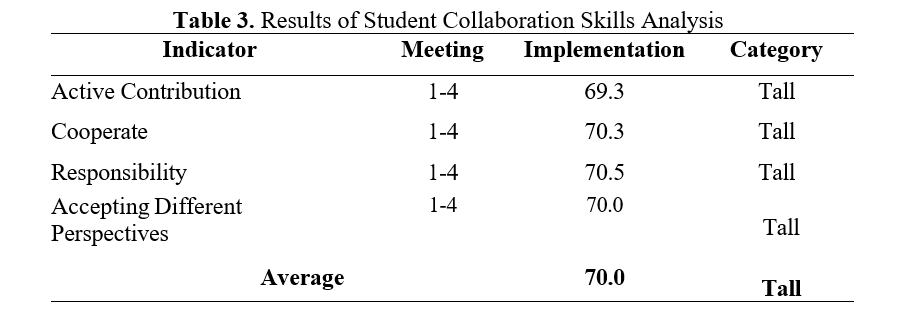
Traditional mathematics instruction has often been insufficient in fostering essential twenty-first-century competencies, particularly students’ collaborative and creative thinking skills. Addressing this challenge, this study aimed to develop and evaluate a Wordwall-integrated multimodal digital mathematics textbook designed to enhance these competencies among elementary school students. The development process was guided by the ADDIE (Analysis, Design, Development, Implementation, and Evaluation) instructional design framework. Following expert validation, the textbook was implemented using a one-group pretest–posttest design involving 20 fourth-grade students. Data were collected through expert validation instruments, practicality questionnaires, collaboration observation rubrics, and a standardized creative thinking assessment. The validation results demonstrated a high level of feasibility across media (95%), content (90%), and instructional design (92%) dimensions. Practicality evaluations further indicated highly positive responses from teachers and students, with an overall mean score of 95.5%. Effectiveness analysis revealed notable improvements in students’ learning outcomes and twenty-first-century competencies, with collaboration skills reaching a high category (70.0%) and creative thinking skills showing moderate improvement (N-gain = 0.60). Furthermore, posttest scores were significantly higher than pretest scores (p < .001), indicating meaningful learning gains following the intervention. These findings suggest that Wordwall-integrated multimodal digital textbooks can serve as an effective instructional resource for promoting collaborative and creative thinking skills in elementary mathematics education and provide empirical support for the integration of multimodal and gamified learning environments in mathematics classrooms.
References
Afrila, D., & Yarmayani, A. (2018). Pengembangan media pembelajaran modul interaktif dengan software adobe flash pada mata kuliah matematika ekonomi di Universitas Batanghari Jambi. Jurnal Ilmiah Universitas Batanghari Jambi, 18(3), 539-551. https://doi.org/10.33087/jiubj.v18i3.521
Alsadoon, E., Alkhawajah, A., & Suhaim, A. (2022). Effects of a gamified learning environment on students’ achievement, motivations, and satisfaction. Heliyon, 8(8), e10249. https://doi.org/10.1016/j.heliyon.2022.e10249
Cunha, G. C. A., Barraqui, L. P., & Freitas, S. A. A. D. (2018). Evaluating the use of gamification in mathematics learning in primary school children. In 2018 IEEE Frontiers in Education Conference (FIE) (pp. 1–5). IEEE. https://doi.org/10.1109/FIE.2018.8658950
Dichev, C., & Dicheva, D. (2017). Gamifying education: What is known, what is believed and what remains uncertain. International Journal of Educational Technology in Higher Education, 14(1), 1–36. https://doi.org/10.1186/s41239-017-0042-5
Ghavifekr, S., & Rosdy, W. A. W. (2015). Teaching and learning with technology: Effectiveness of ICT integration in schools. International Journal of Research in Education and Science, 1(2), 175–191. https://doi.org/10.21890/ijres.23596
Ghavifekr, S., & Rosdy, W. A. W. (2015). Teaching and learning with technology: Effectiveness of ICT integration in schools. International Journal of Research in Education and Science, 1(2), 175–191. https://doi.org/10.21890/ijres.23596
Hanum, N. S. (2013). Keefetifan e-learning sebagai media pembelajaran (studi evaluasi model pembelajaran e-learning SMK Telkom Sandhy Putra Purwokerto). Jurnal Pendidikan Vokasi, 3(1), 90-102. https://doi.org/10.21831/jpv.v3i1.1584
Haruna, N. H., & Masri, S. (2024). Development of interactive digital teaching materials based on problem based learning cultural diversity materials in social sciences learning. Cokroaminoto Journal of Primary Education, 7(1), 84–95. https://doi.org/10.30605/cjpe.712024.3588
Imansari, N., & Sunaryantiningsih, I. (2017). The effect of using interactive e-modules on student learning outcomes on occupational health and safety materials. Scientific Journal of Electrical Engineering Education, 2(1), 11-16. https://doi.org/10.30870/volt.v2i1.1478
Leikin, R., & Pitta-Pantazi, D. (2013). Creativity and mathematics education: The state of the art. ZDM Mathematics Education, 45(2), 159–166. https://doi.org/10.1007/s11858-012-0459-1
Mawaddah, R., Triwoelandari, R., & Irfani, F. (2022). Kelayakan LKS pembelajaran IPA berbasis STEAM untuk meningkatkan keterampilan kolaborasi Siswa SD/MI. Jurnal Cakrawala Pendas, 8(1), 1–14. Retrieved from https://www.ejournal.unma.ac.id/index.php/cp/article/view/1911/1204
Mayer, R. E. (2021). Multimedia learning (3rd ed.). Cambridge University Press. https://doi.org/10.1017/9781316941355
Oliveira, W., Toda, A. M., Palomino, P. T., Rodrigues, L., Shi, L., Bittencourt, I., Isotani, S., Cristea, A. I., & Gasparini, I. (2021). Gamification in education: A systematic mapping study. Educational Technology & Society, 24(1), 13–32. Retrieved from http://www.jstor.org/stable/jeductechsoci.18.3.75
Sadiman, A. S., Rahardjo, R., Haryono, A., & Zain, A. (2012). Educational media: Definition, development, and utilization. Jakarta: Rajawali Pers.
Setyo, A. A., Pomalato, S. W., Hulukati, E. P., Machmud, T., & Djafri, N. (2023). Effectiveness of TPACK-Based multimodal digital teaching materials for mathematical critical thinking ability. International Journal of Information and Education Technology, 13(10), 1604-1608. https://doi.org/10.18178/ijiet.2023.13.10.1968
Suleman, N., Lukum, A., Pikoli, M., La Kilo, A., . M., Nusantasri, E., … Latjompoh, M. (2025). Validity of the 5C Learning Model (Connecting, Confrontation, Collaboration, Clarification, Confirmation) Based on Virtual Laboratory to Enhance Students’ Relational. Galore International Journal of Applied Sciences and Humanities, 9(3), 58–64. https://doi.org/10.52403/gijash.20250307
Voogt, J., & Roblin, N. P. (2012). A comparative analysis of international frameworks for 21st century competences: Implications for national curriculum policies. Journal of Curriculum Studies, 44(3), 299–321. https://doi.org/10.1080/00220272.2012.668938
Vrcelj, Z., Hoić-Božić, N., & Holenko Dlab, M. (2023). Gamification in primary education: Effects on student motivation and collaboration. In Proceedings of the International Conference on e-Learning and Games (pp. 112–121). Springer.
Zubaidah, S. (2016). 21st century skills: Skills taught through learning. In National Education Seminar (Vol. 2, No. 2, pp. 1-17).
Downloads
Published
How to Cite
Issue
Section
License
Copyright (c) 2026 Arie Anang Setyo

This work is licensed under a Creative Commons Attribution-NonCommercial-ShareAlike 4.0 International License.
License and Copyright Agreement
In submitting the manuscript to the journal, the authors certify that:
- They are authorized by their co-authors to enter into these arrangements.
- The work described has not been formally published before, except in the form of an abstract or as part of a published lecture, review, thesis, or overlay journal. Please also carefully read Journal of Honai Math Posting Your Article Policy at http://journalfkipunipa.org/index.php/jhm/about
- That it is not under consideration for publication elsewhere,
- That its publication has been approved by all the author(s) and by the responsible authorities – tacitly or explicitly – of the institutes where the work has been carried out.
- They secure the right to reproduce any material that has already been published or copyrighted elsewhere.
- They agree to the following license and copyright agreement.
Copyright
Authors who publish with Journal of Honai Math agree to the following terms:
- Authors retain copyright and grant the journal right of first publication with the work simultaneously licensed under a Creative Commons Attribution License (CC BY-NC-SA 4.0) that allows others to share the work with an acknowledgment of the work's authorship and initial publication in this journal.
- Authors are able to enter into separate, additional contractual arrangements for the non-exclusive distribution of the journal's published version of the work (e.g., post it to an institutional repository or publish it in a book), with an acknowledgment of its initial publication in this journal.
- Authors are permitted and encouraged to post their work online (e.g., in institutional repositories or on their website) prior to and during the submission process, as it can lead to productive exchanges, as well as earlier and greater citation of published work.




